Reminders Handle Most Customers — This Covers the Rest
Automated SMS/WhatsApp reminders and auto-suspension (covered in our other guides) resolve the majority of late payments without much effort. What's left after that automation runs its course is a smaller group of genuine defaulters — customers who've been suspended, haven't responded to reminders, and represent real outstanding revenue you need an actual recovery strategy for, not just another automated message.
Segment Your Defaulters — They're Not All the Same
Treating every overdue account identically wastes effort. A useful three-way split:
- Recently lapsed (1–2 weeks overdue): Often genuine oversight or temporary cash flow issues — usually recoverable with a simple, low-pressure follow-up
- Chronic late payers (repeatedly overdue but eventually pays): Not necessarily unwilling to pay, but a pattern worth addressing directly — perhaps a plan or billing date mismatch with their cash flow cycle
- Long-term non-responders (months overdue, no contact): Require a different approach — direct outreach, a field visit, or eventually a decision on write-off
A Recovery Ladder That Respects the Customer
Recovery works best as an escalating, but never harassing, sequence:
- Automated reminders (already covered by your billing system) for the first 1–7 days overdue
- A personal follow-up call or message once automated reminders haven't worked — acknowledging the situation rather than just repeating the same automated tone
- A field visit for customers who remain unresponsive, particularly useful for genuinely lapsed contact details or where a conversation can resolve a misunderstanding
- A formal notice for accounts that remain unresolved after reasonable good-faith attempts, clearly stating next steps
💡 Stay on the Right Side of Fair Practice
Persistent, respectful follow-up is good business. Repeated pressure calls, contacting a customer's employer or family without cause, or anything that could be construed as harassment isn't just ethically wrong — it risks real reputational and legal exposure. Keep your recovery process documented, professional, and consistent, and confirm your specific communication practices align with current consumer protection expectations.
Offer Flexible Recovery Options, Not Just "Pay or Stay Cut Off"
A binary all-or-nothing approach often pushes a recoverable customer into becoming a permanent loss. Consider:
- Partial payment plans: Splitting a large overdue balance into two or three smaller payments can recover revenue that a single lump-sum demand wouldn't
- Reduced-speed "fair use" mode: Instead of a full cutoff, some ISPs offer a much-reduced speed for overdue accounts — keeping the customer connected (and more likely to pay) while still creating pressure to settle
- One-time goodwill settlement: For very old dues unlikely to be recovered in full, accepting a partial settlement is often better economics than pursuing the full amount indefinitely
Field Visits: Do Them Right
A recovery-focused field visit should be documented the same way a payment collection visit is — logged with outcome, time, and (where payment is collected) a GPS-tagged digital receipt. This protects both your business and the customer from later disputes about what was discussed or collected during the visit.
Deciding When to Write Off vs. Keep Pursuing
Not every overdue balance is worth continued recovery effort — staff time spent chasing a small, old balance can cost more than the balance itself. A reasonable framework: set a threshold (based on amount and age) below which accounts are automatically flagged for write-off review rather than indefinite pursuit, freeing your team to focus recovery effort on balances where continued effort actually makes financial sense.
Use Data to Catch Likely Defaults Earlier
Your billing history often has early warning signs before a customer becomes a hard default: a pattern of paying later each cycle, partial payments becoming more frequent, or increased complaint volume from an account. Reviewing this pattern periodically lets you proactively reach out — a flexible plan offer or a friendly check-in — before the account becomes a full default rather than after.
Track Recovery as a Real KPI
Monitor your recovery rate (amount recovered ÷ amount that went into default) monthly, not just your overall collection rate. A declining recovery rate is often an earlier warning sign of a broader billing, communication, or customer satisfaction issue than raw churn numbers alone.
How BrightCRM Supports Payment Recovery
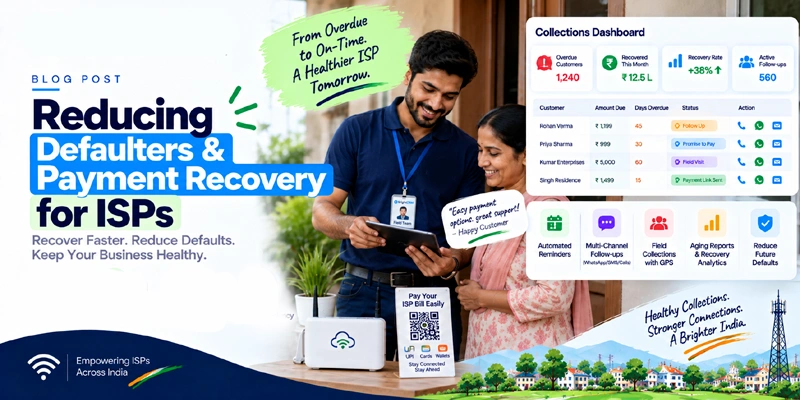
- Automatic segmentation of overdue accounts by how long they've been unpaid, so your team can prioritize effort appropriately
- Escalating SMS/WhatsApp sequences that hand off cleanly to manual follow-up when automation alone isn't resolving the account
- GPS-tracked field collection with instant digital receipts for recovery visits
- Recovery and aging reports to track what's actually being recovered versus what's accumulating as risk
Real-World Impact
Broadband ISP, Aurangabad
"Splitting defaulters into recent vs. chronic vs. long-term completely changed how we allocated staff time. We stopped spending equal effort on every overdue account regardless of how likely it was to actually pay."
Cable Operator, Warangal
"Offering a two-installment option for larger overdue balances recovered accounts we'd otherwise have written off entirely."
Conclusion: Recovery Is a Process, Not a Single Reminder
Reducing defaulters isn't about sending one more aggressive message — it's about segmenting who you're dealing with, offering realistic paths back to good standing, and knowing when continued pursuit stops making financial sense. Done well, it recovers more revenue while treating customers fairly enough that some of them stay long-term.
This guide covers general recovery practices. Ensure your specific collection communications and any formal recovery action comply with current consumer protection expectations and, where relevant, seek legal guidance for larger or disputed balances.
Ready to Recover More Without Losing Customers?
See how BrightCRM's segmentation and recovery reporting help you prioritize collection effort effectively.
Schedule Free Demo